
Grid Sidebar Both

Check out our Latest News!

Pioneering British company, Windship Technology powers first True Zero Emission ship design with high performance rig technology
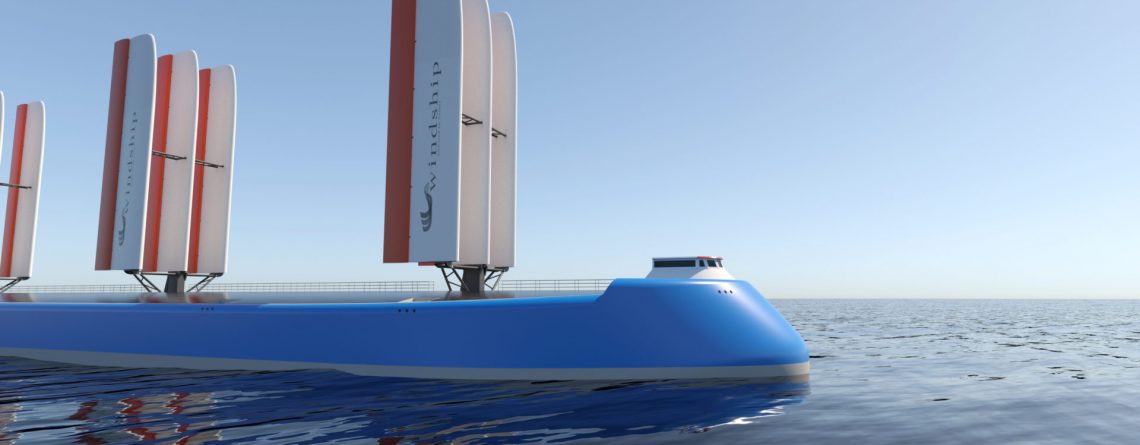
Wolfson Unit Report confirms fuel and efficiency savings from the innovative rig powering the first 100% True Zero Emission solution for shipping. 1st March 2021, London: Windship Technology, Britain’s leading True Zero Emission company for the shipping industry, can today confirm the findings from the world leading Wolfson Unit of the University of Southampton following a detailed study into its innovative and patented triple wing rig. After extensive testing and VPP work conducted at the Wolfson Unit and further Computational Fluid Dynamics and aerodynamic performance optimisation conducted by Cape Horn Engineering, it has been confirmed that an appropriately rigged commercial vessel will achieve savings of fuel and corresponding emissions at a conservative 30% per annum via the rigs alone. The Wolfson Unit report summarised performance predictions in terms of thrust reductions or effective power reductions for a 125,000DWT vessel with two different combinations of rig devices and in application, the rigs are essential to the effectiveness of Windship Technology’s whole ship True Zero Emission design. Speaking about the report, Simon Rogers, Technical Director of Windship Technology commented: “We were delighted to receive this confirmation from the Wolfson Unit after extensive testing and we always knew that the rigs would be the bedrock from which the whole-ship design could be developed. What we now know for sure is that we have the best practical solution for commercial bulk carrier companies that wish to take their climate commitments seriously. The rigs are lower in height with vastly more thrust than single-masted technology. Combined with our whole ship design, Windship Technology can eliminate CO2, NOX, SOX and particulate matter to True Zero through incorporating large solar arrays, carbon capture, optimised hull shapes and specialised weather routing software into the overall design package.” The invention protected by these patents is the use of rigid aerofoil sails for bulk cargo vessels, typically raw mineral carriers (coal, grain, ore, cement, alumina, bauxite et.) or large commercial oil tankers. The global patents cover multiple pairs of leading and trailing aerofoil sections supported on a rotatable spar, and the angular position of the spar can be adjusted as required, as can the angular position of the trailing sections. The 48m Windship Technology rig is stowable on deck through a unique, innovative stowage solution to aid port navigation and cargo handling. Its composite structure is borne out of technology and design from the wind turbine industry, ensuring reliability and longevity of greater than 25 years. Dr-Ing. Rodrigo Azcueta, Managing Director of Cape Horn Engineering is convinced by Windship Technology’s solution saying: “We analysed a multitude of wing assembly shape configurations for Windship Technology in varying wind conditions. In total, almost one thousand, high-fidelity CFD simulations were performed. These simulations were extremely valuable for improving the geometries of the wing assembly and through our detailed investigations at Cape Horn Engineering, a double-digit gain in aerodynamic performance was obtained. Windship Technology’s fixed wing sail systems are highly engineered and have been designed for optimal performance. We are extremely proud to be involved with the technical team on this project.” Windship Technology is now starting to engage with interested parties from both the shipping industry and investment circles. Significant ESG-focused investors are recognising the benefits of True Zero Emission shipping. Furthermore, asset owners and leasing companies such as oil and commodity majors and ship owners are seeking to protect their significant investments in the face of legislation and shareholder sentiment.

Leading expert knowledge and CFD analysis
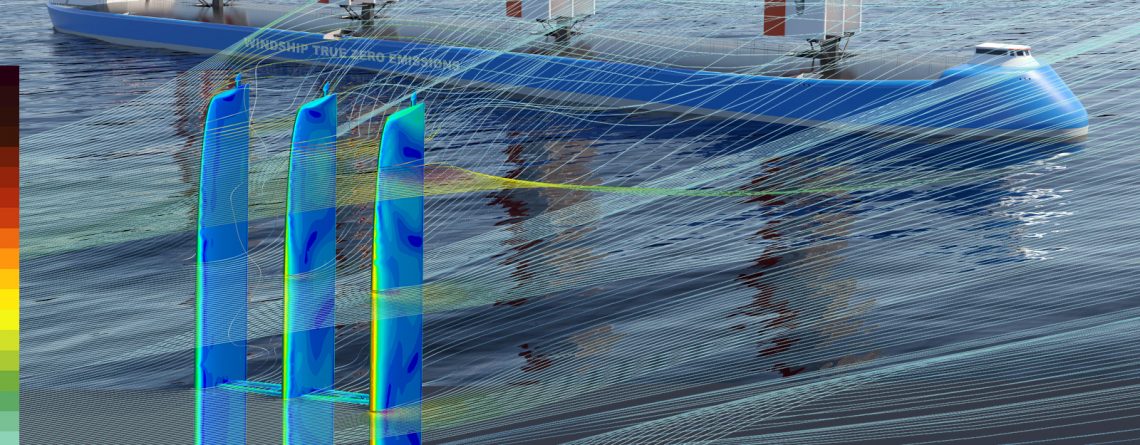
Due to their renowned experience and specialist technology, Cape Horn Engineering were commissioned to provide a holistic analysis of the Windship concept, Wind Propulsion Technology (WPT). Dr.-Ing. Rodrigo Azcueta, Managing Director of Cape Horn Engineering is a leading CFD specialist, and marine engineering expert, recognised around the world for his work with shipbuilders, naval architects and yacht design teams. He studied Naval Architecture and Marine Engineering in Buenos Aires and Hamburg, and following his graduation he continued working at the University of Hamburg on viscous free-surface flows and ship motions, for which he was conferred the degree of Doctor of Naval Engineering. His work as a research engineer at MTG Marinetechnik GmbH included projects for the German Ministry of Defence. Later, as Head of hydrodynamic CFD for three America’s Cup Challenges, winning three consecutive Volvo Ocean Race Campaigns and as Head of CFD for a leading British America’s Cup Team, Azcueta has built his reputation upon a racing pedigree and winning formula over the last two decades. He has since focused on building strong customer relations and has successfully expanded his business, extending the range of services, globally and across the broader maritime sector, with more recent ventures into the renewable energy sector.  Investment in researching new technologies, dedicated to reducing shipping emissions and improving air pollution, is a strong commitment which has been made. Azcueta firmly believes the future will rely on sustainable energy sources and has a strong desire to contribute to this development and to improve the performance of renewable energy technologies. “We have performed an extensive Computational Fluid Dynamic programme to improve the design and performance of the solid wings, as well as providing analytical evidence of potential savings. Our CFD analysis gives understanding and also quantifies the link between the geometry of the wing and the driving force produced. Our studies provide accurate data of how the wings will perform in real conditions and how to improve the design. It is mainly based on the detailed analysis of the driving and side forces generated by each wing configuration. The other forces and moment generated by the airflow on the wings are also computed. By varying some shape and ratio parameters, such as the section’s profile, section’s thickness to chord ratio, main wing to flap chord ratio and wings separation, we can optimise the design to increase the performance. A multitude of wing assembly shape configurations were analysed in varying wind conditions. In total, almost one thousand, high-fidelity CFD simulations were performed and analysed. The simulations were used to set up force models needed to describe the vessel’s hydrodynamic and aerodynamic behaviour. Operating conditions for the WPT devices were apparent wind angle and speed, wind shear and wind gradient (variation of wind speed and direction with height above the water surface), and angle of attack of the wings and its flaps. These simulations were extremely valuable for improving the geometries of the wing assembly. A significant gain in aerodynamic performance - a double digit percentage improvement was achieved by changing some parameters of the geometry. Some selected simulation points were compared and validated with the wind tunnel testing, as well as with previous CFD analysis provided by Lloyds Register. Experts from the Wolfson Unit (University of Southampton) were also involved in the analysis of the CFD results. Extreme wind load cases were delivered to structural experts from Gurit for assuring optimum weight and safety of the structures.”  comments Azcueta.

Windship and DNV unveil ‘first true zero-emissions’ design

Tradewinds, the Global Shipping News Source, reported:
UK company claims new wind-powered system is the "Tesla of the seas". Windship Technology has revealed what it claims is the world's first truly zero-emissions ship system. The UK company has brought Norwegian classification society DNV on board to help develop a wind-powered design it refers to as the "Tesla of the seas".... "Per Marius Berrefjord, senior vice president at DNV, called the Windship team "experienced professionals". He said the project aims to help bring the entire shipping industry to "true zero" in terms of emissions. "Windship is supplying information in a fully transparent manner, and DNV will ensure a thorough verification process. We are looking forward to dive deeper into the very interesting technology presented by Windship," the DNV executive added. Windship is now looking to seal commercial partnerships with major shipowners, operators and investors, the UK company said. The Windship board includes former Concordia Maritime chief executive Lars Carlsson. The ex-tanker executive said: "The industry cannot sit back any longer. The clock is ticking and regulation will force a new approach for an industry that is traditionally hesitant to change." He added shipping is not fit for purpose for the future. Carlsson has been advocating wind power for a number of years. He said in 2019 that owners should be using all known fuel-saving methods, including wind propulsion, lower speeds, design and operational optimisation and biofuels derived from waste. And he called for new vessels to be built with anti-corrosion coated steel to give them a longer trading life of 50 years, a global fossil-fuel tax to encourage sustainable investment and the creation of a carbon exchange trading market.
Read the full article from Tradewinds > Tradewinds subscribers, click here to find out more from Tradewinds > 
The ‘Tesla of the Seas’ – pioneering British company, Windship Technology unveils first True Zero Emission ship design
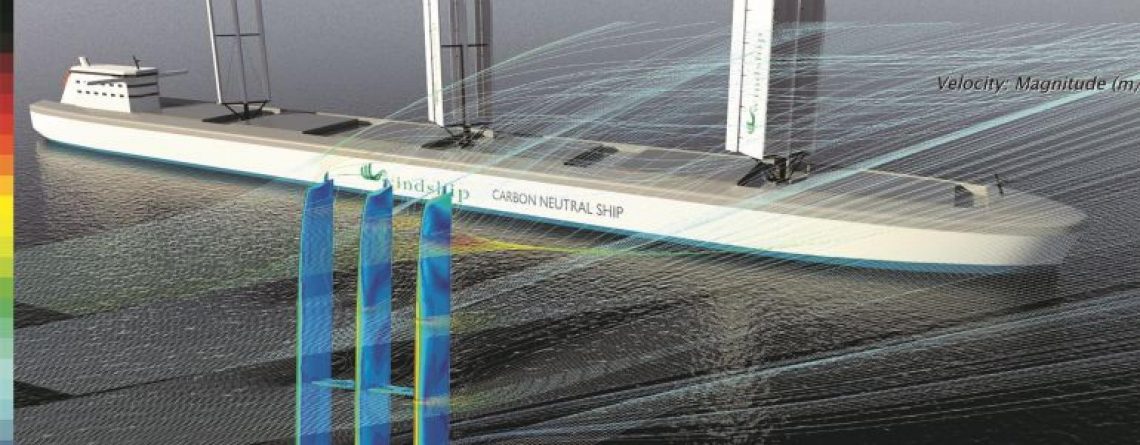
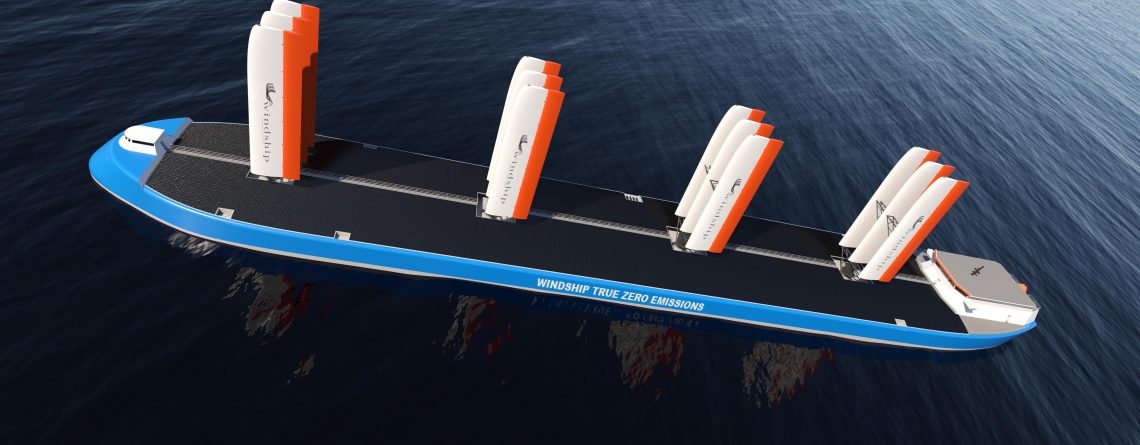
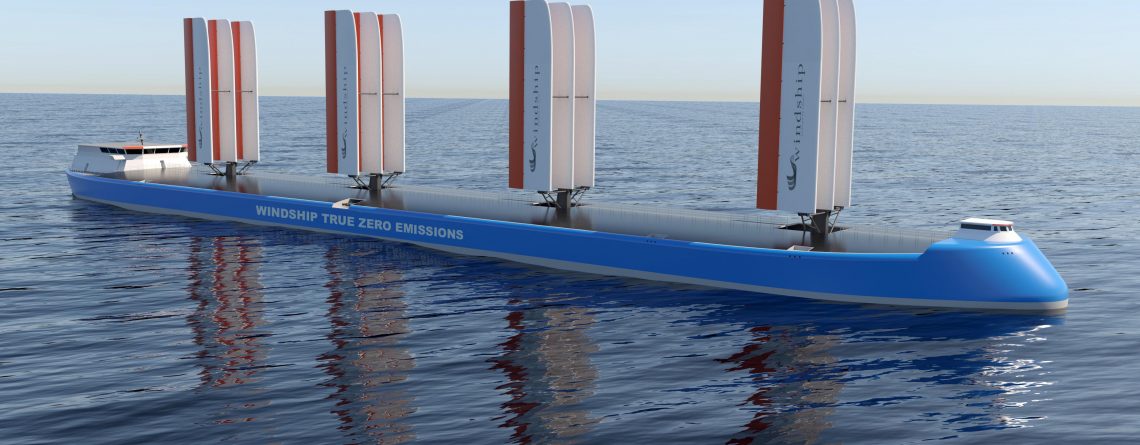
With shipping now accounting for over 3% of global CO2 emissions, and still increasing, the innovative all-ship solution is set to revitalise an industry under pressure to reform. Windship Technology, a British company with a whole-ship solution to tackle the CO2 emissions of the shipping industry, today unveils its designs and announces an investment partnership with one of the world’s leading classification agencies. Starting from a clean drawing board, Technical Director Simon Rogers and his design team developed and tested at the renowned Wolfson Unit in Southampton the company’s patented high performance, highly efficient triple-wing rig. The technical team further developed a new diesel electric ship drive system that eliminates CO2, NOX, SOX and particulate matter to True Zero whilst also incorporating large solar arrays, carbon capture, optimised hull shapes and specialised weather routing software into the overall design package. The eye-catching triple-wing rigs produce a driving force several multiples greater than single masted solutions of the same height currently being promoted in the industry. The 48m Windship Technology rig is stowable on deck through a unique, innovative stowage solution to aid port navigation and cargo handling. Its composite structure is borne out of technology and design from the wind turbine industry, ensuring reliability and longevity of greater than 25 years. Professor Philip Wilson, formerly Professor of Ship Dynamics at the Ship Science Department at the University of Southampton is convinced by Windship Technology’s solution saying: “The holistic approach demonstrated in this solution whereby wind power, solar power and the reduction of harmful exhaust emissions to effectively zero, are all brought together, means that at last there is a design solution that the International Maritime Organisation can champion to achieve its requirements for ‘at least’ zero carbon shipping.” Now the company announces a significant partnership investment with the international registrar and classification society DNV who will be conducting both an outside-in and inside-out verification to fully assess Windship Technology’s whole-ship design with a view to classifying emission reductions, safety and operability. Per Marius Berrefjord (Senior Vice President) of DNV commented:We are delighted to be working with such experienced professionals at Windship Technology in a project which aims to help transform the entire shipping industry to True Zero. We will work closely with the project team in a fully transparent manner as we now initiate the work to establish a simulation model that will help us verify the GHG emission reduction capability of the technology. We are also preparing for a HAZID that shall verify the safety and operability of ships with Windship Technology installed. These activities will be followed by further verification activities as the project moves forward. Windship is supplying information in a fully transparent manner, and DNV will ensure a thorough verification process. We are looking forward to dive deeper into the very interesting technology presented by Windship.” Against a backdrop of new build ship orders down over 50% in 2020, and regulators such as the International Maritime Organisation backed by the United Nations demanding environmental and sustainable reform from the industry, Windship Technology is offering a ‘Tesla of the Seas’ solution for shipping. The Windship Technology True Zero Emission solution is presently the only viable and most economical zero emission project for ocean-going bulk carrier and oil tanker ships. As an investment case, the solution appeals to asset owners looking to secure their investments over the lifespan of a ship’s working life and is attracting significant investor interest in the financial markets. Windship Technology is now looking to cement commercial partnerships with major ship owners, operators and investors with the vision to transform the shipping industry and address the growing emissions issue that can no longer be ignored. Speaking about the new cooperation with DNV, Lars Carlsson, Director of Windship Technology commented:Working with DNV is a major step towards proving true zero emission status. The industry cannot sit back any longer. The clock is ticking and regulation will force a new approach for an industry that is traditionally hesitant to change. Shipping is not fit for purpose in the future. Shipping and oil companies are the only major industries still increasing their emissions and must change and think differently if it is to have any hope of reaching the emissions targets set out in law.

Use of fluid mechanics improves the efficiency of wind-assisted ships

UK-based Cape Horn Engineering has reported a two-digit percentage improvement in the aerodynamic performance of a vessel’s solid wing assembly via the use of Computational Fluid Dynamic (CFD) programme. The use of Wind Propulsion Technology (WPT) such as rigid wings, sails, kites, Magnus rotors on some vessels like bulk carriers and tankers have the potential of fuel savings and emission reductions around 10-30%.

Cape Horn Engineering said it is supporting one of its clients, Windship Technology, on a solid wing power concept that is being developed by a consortium of key players in the global shipping industry.

“We are extremely proud to be part of the team led by Windship Technology for this exciting project, running a CFD programme to further improve the design of the solid wings,” said Rodrigo Azcueta, managing director of Cape Horn Engineering.

“One of the key focuses of our project is to provide a clearer, unbiased and more detailed analysis of the new technologies available. The analytical evidence provided will give businesses a clearer understanding of the potential savings that can be realised with the implementation of the green propulsion systems. Without significant mitigating action it is projected that the global shipping industry could account for almost a fifth of carbon emissions by 2050,” Azcueta said.

Read the full Seatrade Maritime News article: here.